
3D printing company Divergent to produce Tomahawk structure at new factory, CEO says
“We need all hands on deck, we need as many of these as we can possibly get, and Divergent is good complimentary supply for [Raytheon],” said CEO Lukas Czinger.
“We need all hands on deck, we need as many of these as we can possibly get, and Divergent is good complimentary supply for [Raytheon],” said CEO Lukas Czinger.

When the Pentagon stops buying, it doesn’t reflect “demand signal,” but “execution volatility” for smaller suppliers, Rachel Gorken, president of GMS Industrial Supply, writes in this op-ed.


A commitment to long-term operational value.

Current policy strongly prohibits the Army from ordering small quantities of spare parts with short notice. That currently acts as an Achilles heel for their Abrams tank fleets.
The framework for video streaming could offer a solution to reconcile the right to repair debate between the Pentagon and independent contractors, writes John Ustica.

“I acknowledge that their intellectual property is their intellectual property,” Lt. Gen. Christopher Mohan, said of the vendors. “It is a shame on us for not buying it up front, which is foolish, a fool's errand."

“[We’re] empowering our generals to take on that risk where we have the right to repair so that they can make these very small parts to get things back on and get them back into the hands of our soldiers," Secretary Driscoll said.

Explore how software, edge AI and resilient connectivity can strengthen military logistics in contested environments. Join Breaking Defense on Oct. 21 and earn 1 CPE credit.

From printing thousands of drone “bodies” to hundreds of vehicle components, the land service sees a host of opportunities from additive manufacturing.


Technology insertion into legacy platforms and electronics requires creativity in designing computer systems that can communicate with them.

The systems may be off-the-shelf, but the packaging for integration on vehicles and ships provides cradle-to-grave resiliency.

“If you are a supplier, and your lead time is too long, and you refuse to work with us” on 3D printing alternative spare parts, said Rear Adm. Jon Rucker, “we're going to figure it out. Not a threat – a fact of life.”


GA-ASI is serious about retaining its position as the leading provider of UAS to the United States and its allies.

The engine maker is also introducing additive manufacturing in other existing engine designs to reduce their cost and speed up their manufacturing, in a bid to make them more attractive for programs that seek to mass produce cheap drones.

The proliferation of 3D printers, combined with loosened rules on using them, could change the way the Navy fixes its ships at sea, a top officer tells Breaking Defense.
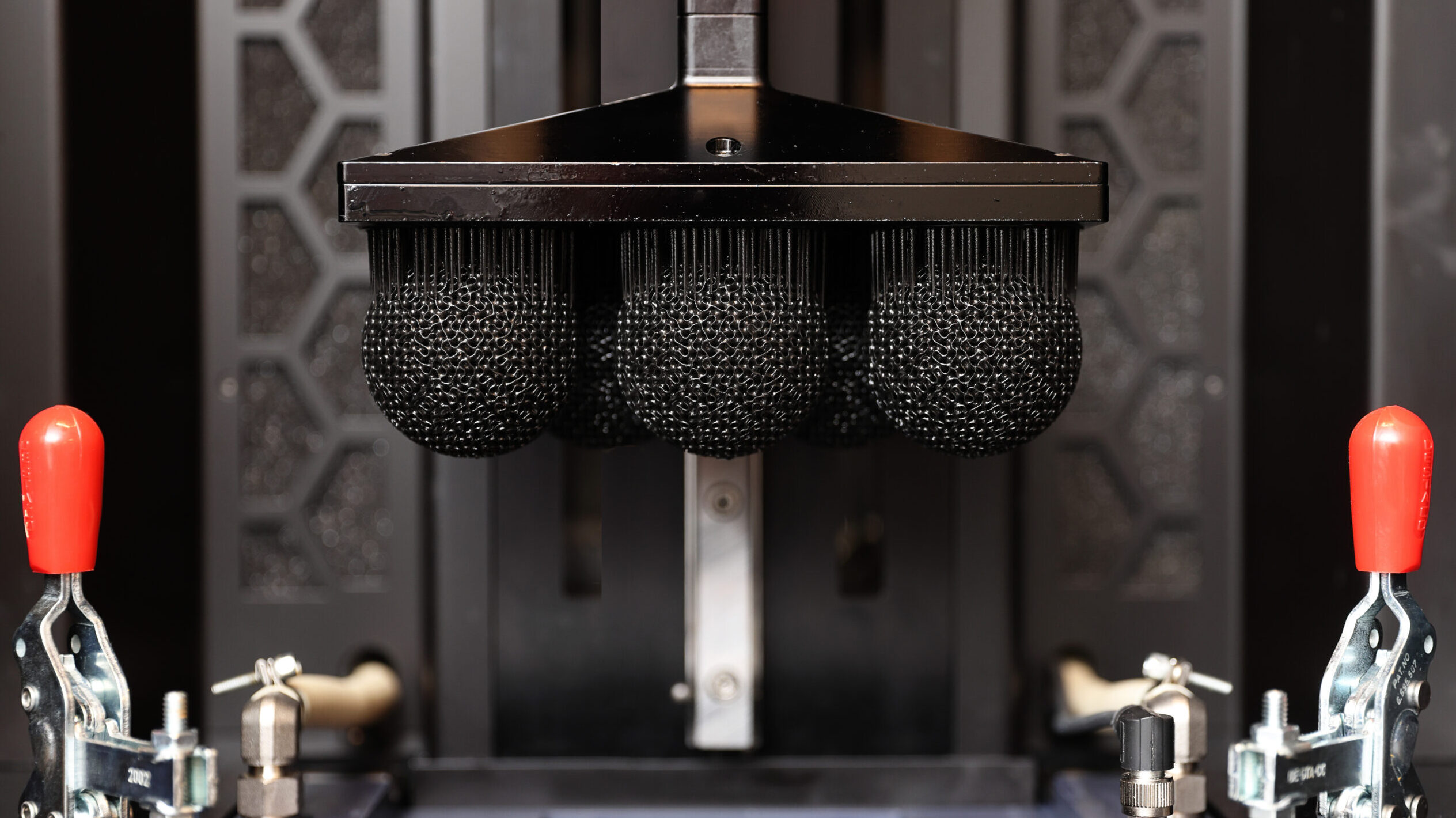
The company, just 55 employees strong, boasts a unique approach to additive manufacturing of lightweight, versatile composites well-suited to aerospace applications from fighter aircraft and drones to hypersonics.

For something like a small UAS, “instead of taking years to develop [a design] it takes months, and instead of taking weeks to manufacture by laying out carbon fiber, we take hours to assemble," Divergent CEO Kevin Czinger told Breaking Defense.